SPRAICO.AI
Introduction
Project partnerships
SPRAICO.AI Project Partnerships are custom, trust-based structures that overlay Project Packages and Project Processes. They help you add value to your project where decisions involve partners, funders, project agents, buyers, operators or future owners.
You also gain access to financial and scalability benefits that extend well beyond SPRAICO.AI Project Packages and Project Processes.
With the right partnership structure in place, SPRAICO.AI advisory and all our project-relevant information and technology solutions become an integral part of your project within the overall project budget.

Partnerships as continuity structures
Project Partnerships
Project sequence
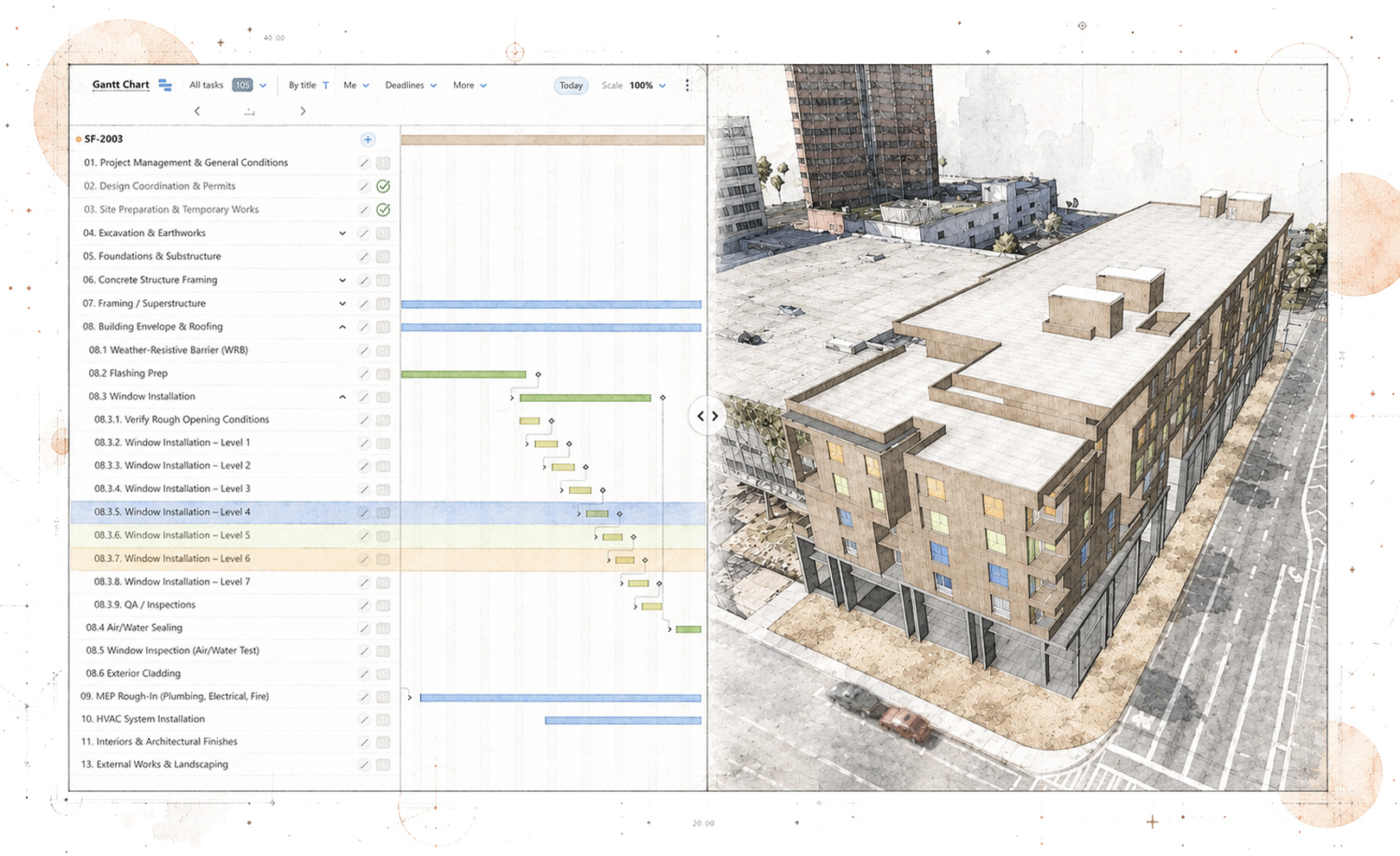
Project sequence — a linear approach to project continuity
Project risks
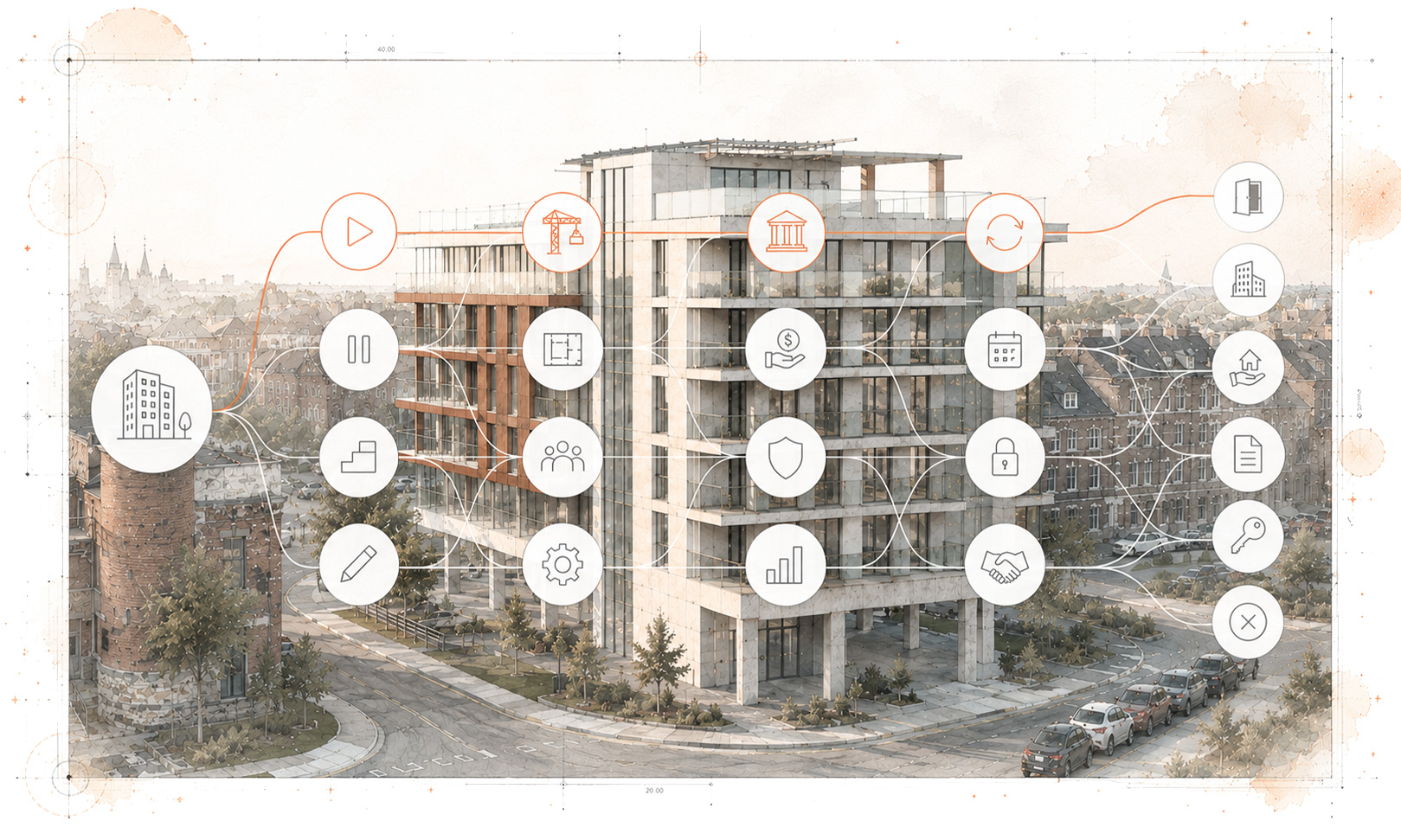
Project risks sit before the numbered sequence because unresolved risk affects every later stage. Bringing risks into view helps you understand planning uncertainty, information gaps, funding pressure, project-agent dependencies, site constraints, cost exposure or unclear evidence before they become harder to manage.
0. Strategy
Strategy defines the project direction before the project moves into technical, commercial or construction decisions. It helps you connect land, planning, volume, funding, delivery, sale, transfer or exit objectives into a clearer information position.
1. Sites
Sites establish the physical and project base: location, boundaries, access, constraints, existing conditions, planning context and site evidence where useful. A clear site position helps you understand what the project is built on and what later decisions depend on.
2. Volume
Volume gives you a clearer view of what may be possible on the site: buildable area, massing, layout logic, unit assumptions, technical constraints and development capacity. It helps turn early project assumptions into references that can support permitting, pricing, contractor scope and exit value.
3. Zone data
Zone data structures the project into usable information areas: units, floors, rooms, common parts, technical zones, parking, storage, external areas or other defined spaces. This gives you a project dataset that can support sales material, BIM / IFC logic, contractor references, handover, FM and transfer.
4. Permit & sale
Permit and sale logic connects what the project is allowed to become with how it may be presented, financed, transferred or sold. It helps keep licenses, planning status, area data, unit logic, marketing claims and buyer-facing information aligned with the underlying project evidence.
5. Trades’ contracts
Trades’ contracts depend on what information has been issued, priced, excluded, assumed or left unclear. Structuring contractor-specific information helps you see what each trade is working from, where dependencies sit and what may affect cost, time, quality or delivery risk.
6. Building coordination
Building coordination connects architectural, structural, MEP, site, contractor and technical information into a clearer project view. It helps you see visible gaps, clashes, outdated versions, discipline assumptions and open coordination questions without replacing professional coordination responsibility.
7. Trades’ schedule
Trades’ schedule connects contractor activities, sequencing, lead times, dependencies, access, inspections, approvals and visible progress. It helps you understand timing risk, progress logic and unresolved items with less reliance on scattered conversations or isolated updates.
8. Construction
Construction is where information becomes physical reality. Drawings, models, instructions, contractor responses, site evidence, progress photographs, Reality Capture, changes, inspections and handover preparation can remain connected so you maintain a clear evidence trail during delivery.
9. Close-out
Close-out carries the project from construction into completion, handover, operation, refinancing, transfer or sale. As-built records, certificates, manuals, warranties, space data, asset data, FM references and final evidence become easier to preserve before project knowledge disappears during handover.
Project partnerships
Strategic advantage
Lawful optionality
More options
You keep more lawful options available when the project situation changes. With SPRAICO.AI support, the project is easier to continue, pause, replace any legal project agent, adjust scope, finance, refinance, transfer, hold or exit without becoming trapped by one person, firm, file system, approval path, platform, capital source or technical narrative.
Less dependency
This does not mean acting outside contracts, licenses, professional duties or agreed responsibilities. It means keeping enough information clarity, evidence continuity and decision visibility to choose between lawful routes before dependency becomes a constraint. Optionality is not control over others; it is a stronger position from which to act.
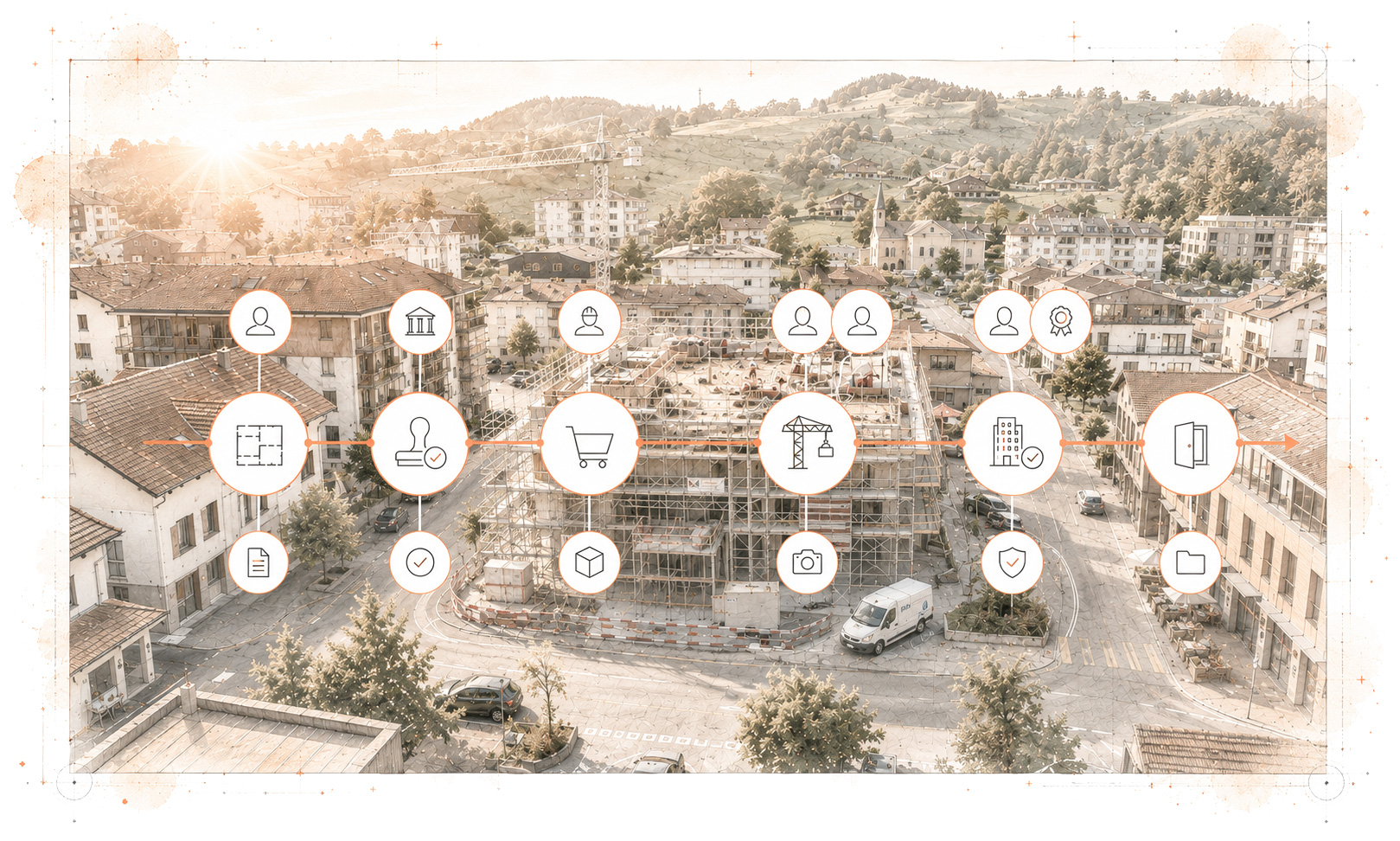
Progress and continuity
Progress and direction
You maintain a clear view across project stages, with all responsibilities clearly defined. This allows you, as the developer, to remain an active project participant, responsible for the decisions, direction, programming and financing assigned to you under the applicable project structure, contracts and law, including obligations concerning control, licensing and delivery documentation.
Continuity and accountability
Clear handovers and information continuity help you understand what has happened, what remains open, which agent is responsible, what has been evidenced and what still requires verification. The purpose is not to replace architects, engineers, contractors or certifiers, but to keep the developer-side view coherent throughout stage changes, handovers and decisions.
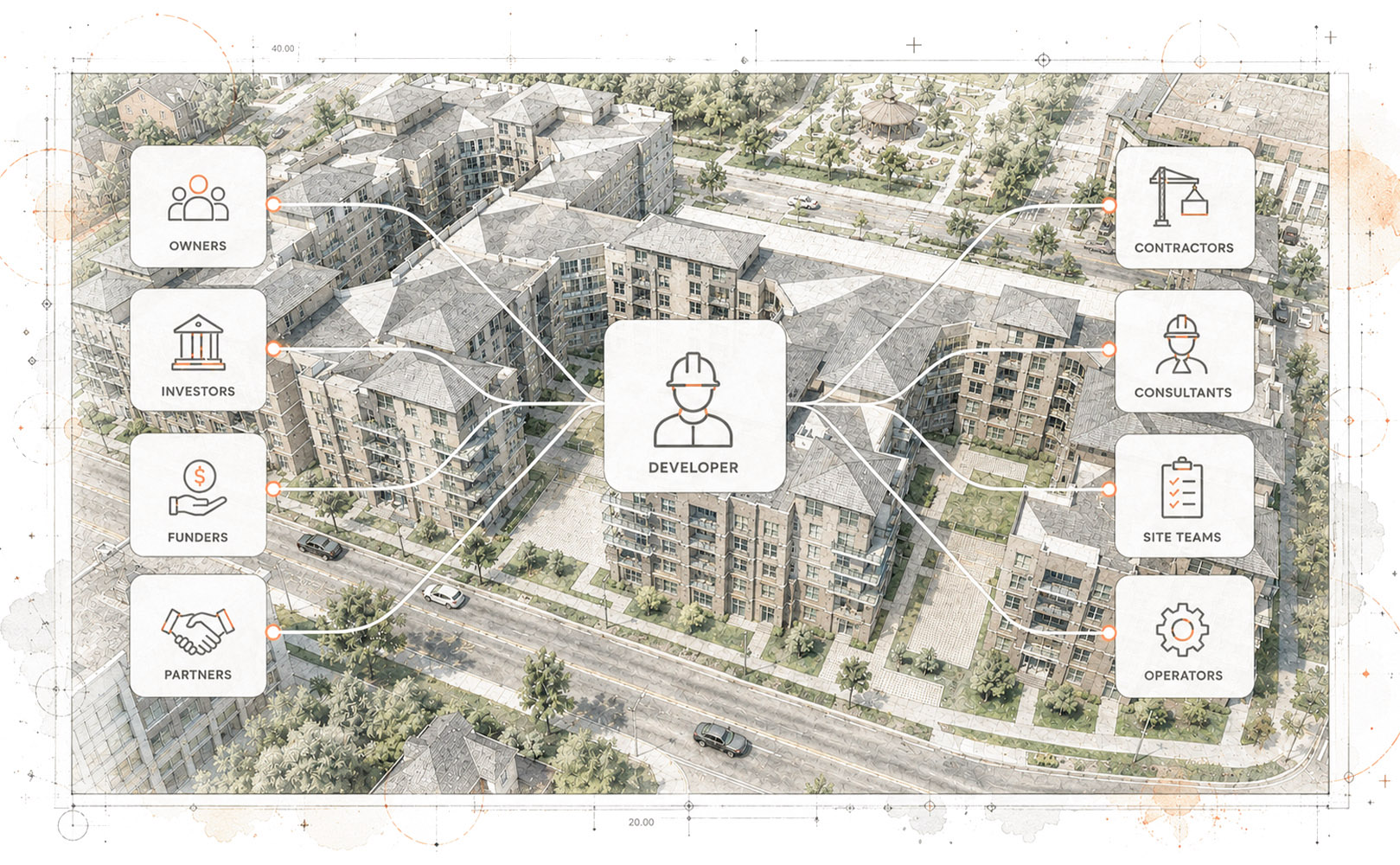
Reporting and directing
Reporting upward
You gain stronger control over the upward flow of project information. Shareholders, funders, partners, buyers, operators and future owners can receive a clear view of status, risk, dependencies, progress evidence and unresolved items, supported by a project-information position that is easier for the developer to explain and defend.
Directing downward
You also gain stronger control over the downward flow of project information. Project agents, consultants, contractors and delivery teams can receive clear instructions, questions, references, dependencies and follow-up. You do not take over professional responsibilities; you direct your project from a clear, better-documented position.
Project evidence
Developer-side evidence
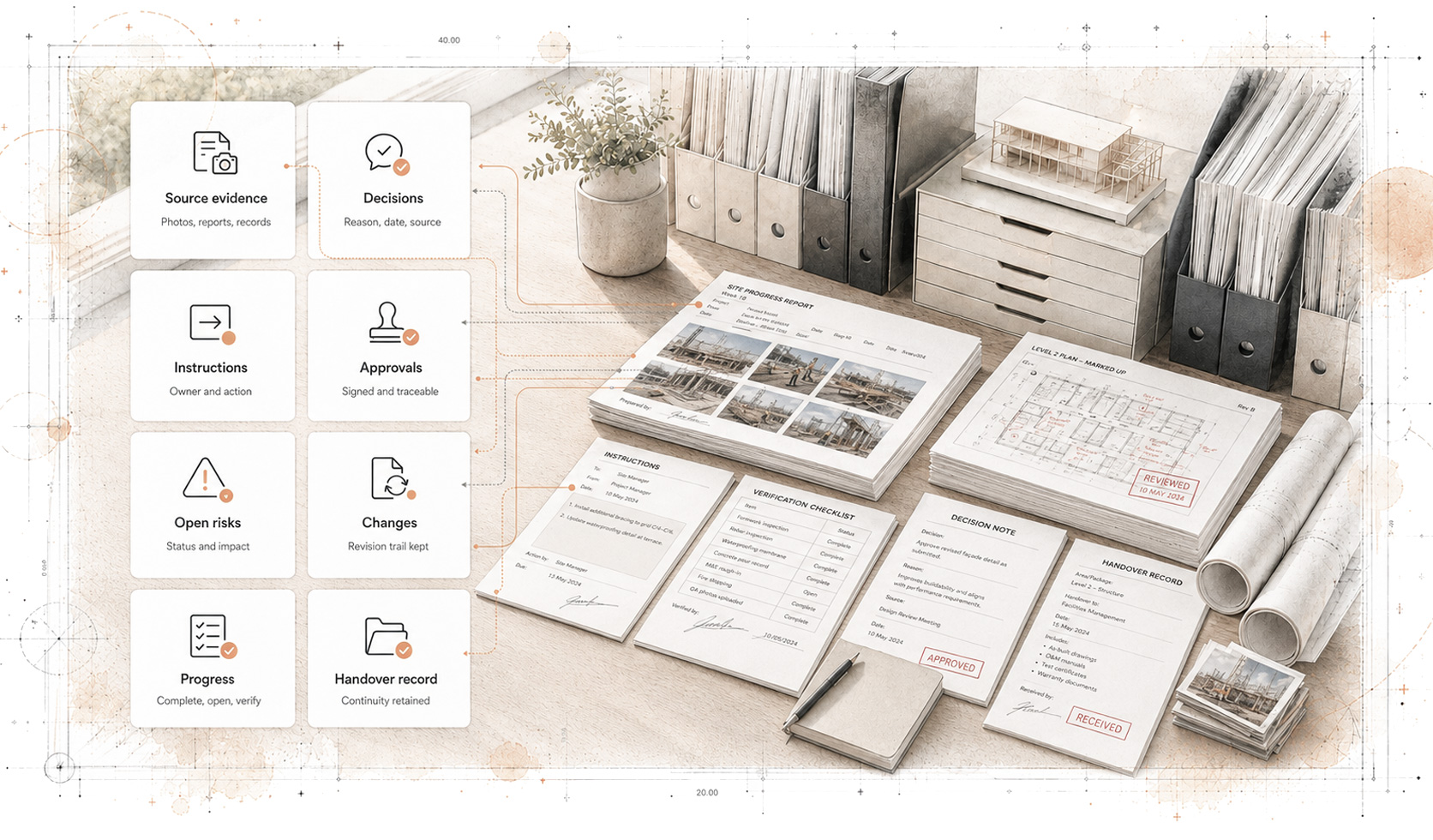
SPRAICO.AI helps you maintain a source-backed evidence trail on the developer side rather than leaving records scattered across project agents, inboxes, platforms, meetings or handover points. At the Project Partnership level, decisions, instructions, approvals, dependencies, risks, changes, progress records and completion references become easier to trace throughout the project lifecycle.
Continuity beyond handover
That evidence remains useful when teams change, files move, responsibilities pass between parties or the project needs to support refinancing, transfer, operation, sale or future ownership. The value lies not only in having records, but in maintaining them with sufficient continuity, source context and structure to support your developer-side decisions throughout the entire project lifecycle.
SPRAICO.AI
SPRAICO.AI ©